
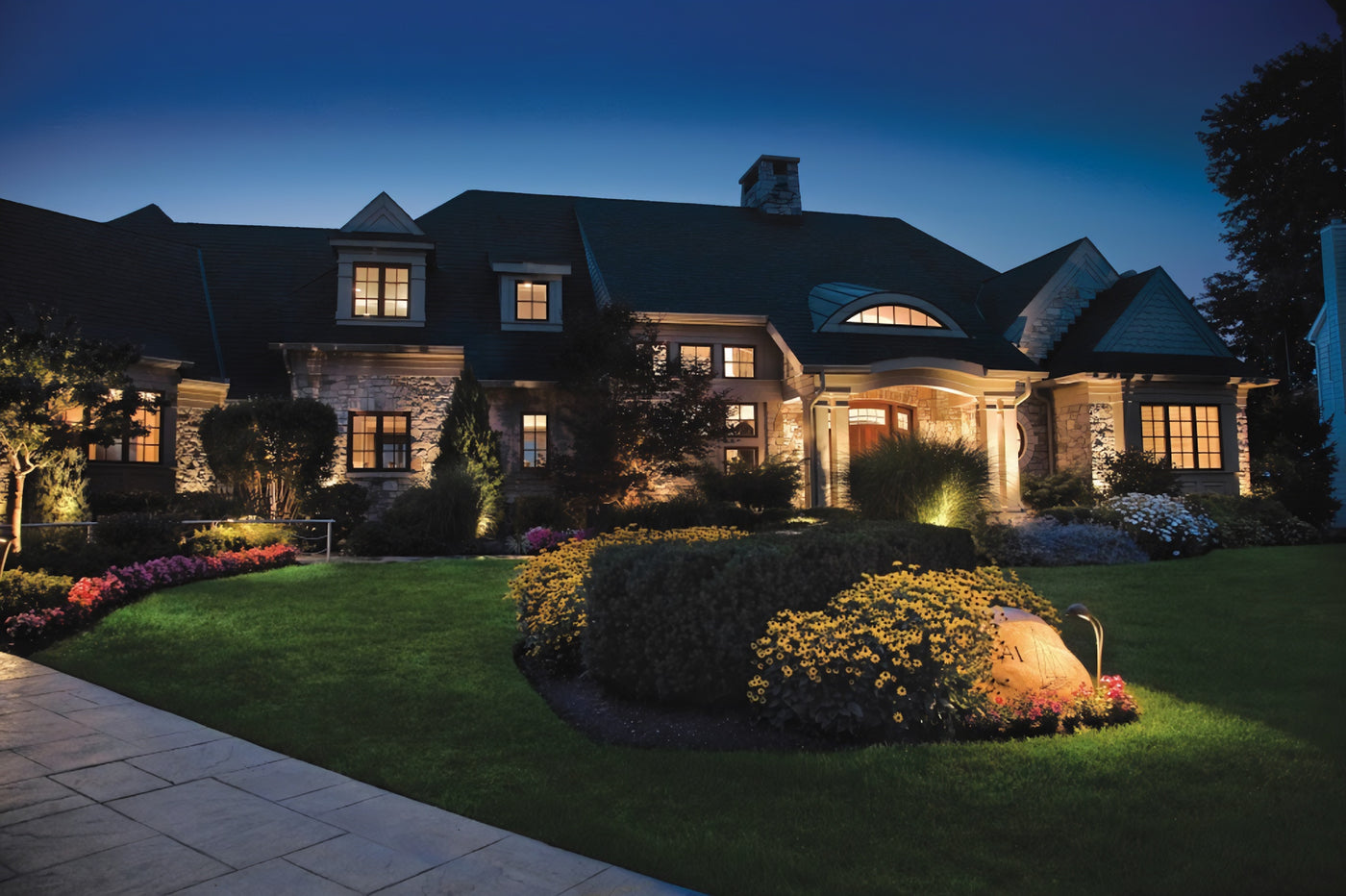
Landscape Lighting FAQs
Have questions about low voltage landscape lighting? You’re in the right place. Whether you’re lighting a walkway, backyard, trees, patio, outdoor kitchen, driveway, or an entire property, this guide answers the most common questions homeowners and contractors ask before buying outdoor lighting.
At Lone Mountain Lighting, we specialize in professional-grade landscape lighting products designed for long-term outdoor performance, including brass fixtures, LED lighting, transformers, wire, and installation accessories.
General Landscape Lighting Questions
What is landscape lighting?
Landscape lighting is outdoor lighting used to illuminate yards, walkways, gardens, trees, patios, driveways, architectural features, and outdoor living spaces. A well-designed landscape lighting system can improve curb appeal, increase nighttime visibility, enhance safety, and make outdoor spaces more enjoyable after dark.
Most residential systems use low voltage landscape lighting, which typically runs on 12 volts instead of standard household voltage.
What is low voltage landscape lighting?
Low voltage landscape lighting uses a transformer to convert standard 120-volt household power into 12-volt power for outdoor fixtures. This makes it a popular choice for residential outdoor lighting because it is energy efficient, flexible, and ideal for path lights, spot lights, flood lights, well lights, deck lights, step lights, and hardscape lights.
Why should I install landscape lighting?
Landscape lighting can improve the look, function, and safety of your outdoor space. It helps highlight architectural details, illuminate walkways, brighten dark areas, showcase landscaping, and extend the use of patios, pools, decks, and outdoor kitchens into the evening.
It can also make a home feel more welcoming and polished from the street.
Does landscape lighting increase home value?
Professionally designed outdoor lighting can improve curb appeal and may help make a home more attractive to buyers. While every property is different, landscape lighting is often viewed as a valuable exterior upgrade because it improves both the appearance and usability of outdoor spaces.
Can landscape lighting stay on all night?
Yes, landscape lighting can stay on all night when the system is properly installed and paired with energy-efficient LED fixtures. Many homeowners use timers, photocells, or smart controls so their lights turn on at dusk and turn off automatically later at night or at sunrise.
Is landscape lighting expensive to operate?
LED landscape lighting is generally inexpensive to operate compared with older halogen systems. Because LED fixtures use less energy, homeowners can light walkways, trees, patios, and other outdoor areas while keeping electricity usage relatively low.
What are the main types of landscape lighting fixtures?
Common landscape lighting fixture types include path lights, spot lights, flood lights, well lights, deck lights, step lights, hardscape lights, underwater lights, and accent lights. Each fixture type serves a different purpose, from lighting walkways to highlighting trees, walls, columns, and outdoor living areas.
Installation Questions
Can I install landscape lighting myself?
Many low voltage landscape lighting systems can be installed by homeowners with basic tools and planning. However, larger or more complex projects may benefit from a professional installer, especially when lighting multiple zones, long wire runs, stairs, walls, pools, or hardscape features.
Do I need an electrician for low voltage landscape lighting?
Low voltage lighting is commonly used because it is simpler to work with than line voltage lighting. However, you may need an electrician if you are adding a new outdoor outlet, connecting power where none exists, or working with 120-volt electrical components.
When in doubt, consult a licensed professional.
How deep should landscape lighting wire be buried?
Landscape lighting wire is often buried shallowly beneath mulch, soil, or turf, but the proper depth can depend on local code, installation conditions, and the area where the wire is being placed. Wire should be protected from edging, digging, foot traffic, irrigation work, and future landscaping changes.
Where should the transformer be installed?
A landscape lighting transformer is usually installed near an outdoor GFCI outlet in a location that is accessible, ventilated, and protected from excessive water exposure. It should be mounted securely and placed where it can support the planned wire runs for the lighting system.
How many lights can one transformer power?
The number of lights a transformer can power depends on the total wattage of the fixtures, the transformer capacity, wire gauge, wire run length, and voltage drop. As a general rule, you add up the wattage of all fixtures on the system, then choose a transformer with enough capacity to handle the load with room for future expansion.
Can I add more landscape lights later?
Yes. Low voltage landscape lighting systems are often expandable. If you think you may add more lights in the future, choose a transformer with additional capacity and plan wire runs with expansion in mind.
What wire should I use for landscape lighting?
The right wire depends on the size of the lighting system, distance from the transformer, fixture wattage, and voltage drop. Common low voltage landscape lighting wire options include 12-gauge, 14-gauge, and 16-gauge wire. Larger systems and longer runs often require heavier gauge wire.
LED Landscape Lighting Questions
Are LED landscape lights better than halogen lights?
LED landscape lights are usually more energy efficient, longer lasting, and lower maintenance than halogen landscape lights. LEDs also produce less heat and allow homeowners to run more fixtures with less power demand.
How long do LED landscape lights last?
The lifespan of LED landscape lights depends on fixture quality, installation conditions, heat management, moisture protection, and usage. High-quality LED fixtures are designed for long-term outdoor performance and can last for many years when installed properly.
What color temperature is best for landscape lighting?
Warm white light is the most popular choice for residential landscape lighting. Many homeowners prefer 2700K to 3000K because it creates a soft, welcoming glow that works well for homes, gardens, pathways, trees, and outdoor living spaces.
Cooler color temperatures can look brighter and more modern but may feel harsher in residential settings.
What are lumens?
Lumens measure brightness. In landscape lighting, lumens help determine how much light a fixture produces. Path lights, step lights, accent lights, spot lights, and flood lights may all require different lumen levels depending on the area being illuminated.
What is beam angle?
Beam angle describes how wide or narrow the light spreads from a fixture. Narrow beam angles are often used for tall trees, columns, and architectural accents. Wider beam angles are better for walls, shrubs, signs, and broader areas.
Brass Fixture Questions
Why choose brass landscape lighting?
Brass is one of the most durable materials for outdoor landscape lighting fixtures. Solid brass fixtures are strong, corrosion resistant, and well suited for long-term exposure to weather, irrigation, soil, and changing outdoor conditions.
Is brass better than aluminum for landscape lighting?
Brass is generally considered more durable than aluminum for outdoor lighting. Aluminum fixtures are often more affordable, but they can be more vulnerable to corrosion and wear over time. Brass fixtures are heavier, stronger, and better suited for long-term installations.
Will brass landscape lights rust?
Brass does not rust like steel. Over time, brass naturally develops a patina, which can darken or age the appearance of the fixture. Many homeowners and contractors like this because it helps the fixture blend into the landscape.
Are brass landscape lighting fixtures worth it?
For many homeowners and contractors, brass fixtures are worth the investment because they are built for durability and long-term outdoor performance. They are especially useful in high-end residential projects, coastal areas, wet environments, and installations where long product life matters.
Transformer Questions
What does a landscape lighting transformer do?
A landscape lighting transformer converts standard household voltage into low voltage power for outdoor lighting fixtures. Most low voltage landscape lighting systems require a transformer to safely power the lights.
What size transformer do I need?
The transformer size depends on the total wattage of your fixtures and whether you want room to expand later. Add up the wattage of all lights in the system, then choose a transformer with enough capacity for that total load plus additional headroom.
Should I buy a larger transformer than I need?
In many cases, yes. Choosing a transformer with extra capacity can make it easier to add more lights later. However, the transformer should still be sized appropriately for the system and installed according to manufacturer guidelines.
What is voltage drop?
Voltage drop happens when power decreases over a long wire run. If voltage drop is too high, lights farther from the transformer may appear dimmer. Proper wire gauge, transformer placement, and system layout help reduce voltage drop.
Maintenance and Troubleshooting Questions
Why did one of my landscape lights stop working?
A landscape light may stop working because of a loose connection, damaged wire, failed LED, moisture issue, transformer problem, or fixture damage. Start by checking the connection, wire, and fixture before replacing parts.
Why are my landscape lights flickering?
Flickering lights can be caused by loose connections, overloaded transformers, voltage drop, moisture intrusion, damaged wire, or failing LED components. If multiple fixtures flicker at once, the issue may be related to the transformer or wiring layout.
How do I clean brass landscape lighting fixtures?
Brass fixtures can usually be cleaned with a soft cloth and mild soap. Avoid harsh chemicals or abrasive materials unless the manufacturer recommends them. Keep lenses free of dirt, hard water buildup, leaves, and debris so the light output stays clear.
Do landscape lights need regular maintenance?
Yes. Landscape lighting systems should be checked periodically for damaged wire, loose connections, leaning fixtures, blocked lenses, plant overgrowth, and transformer issues. Seasonal maintenance helps keep the system looking and performing its best.
Buying Questions
What landscape lights do I need?
The right landscape lights depend on what you want to illuminate. Path lights are used for walkways and garden beds. Spot lights are used for trees, walls, columns, and architectural features. Flood lights cover wider areas. Step lights, deck lights, and hardscape lights are used for outdoor living spaces, stairs, walls, and built-in features.
What is the difference between path lights and spot lights?
Path lights spread light downward and outward to illuminate walkways, garden beds, and borders. Spot lights project a more focused beam and are commonly used to highlight trees, walls, columns, statues, and architectural features.
What is the difference between spot lights and flood lights?
Spot lights produce a narrower, more focused beam. Flood lights produce a wider beam that covers a larger area. Use spot lights for accents and flood lights for broader illumination.
How many landscape lights do I need?
The number of lights depends on your property size, layout, design goals, fixture brightness, and the areas you want to illuminate. A small front walkway may only need a few path lights, while a full-property system may include path lights, spot lights, well lights, hardscape lights, and deck lights.
Need help choosing the right lighting?
If you’re not sure which fixtures, transformer, wire, or accessories you need, Lone Mountain Lighting can help. Our team can help you choose professional-grade outdoor lighting products for your home, landscape, or installation project.